
Ag Business & Corporate Law
Your operation isn't a hobby. It's a business — and it deserves a legal structure that protects the people running it, not just the assets on paper.
Handshake Deals Don't Survive Generations
There are farm families running multi-million dollar operations with nothing more than a handshake operating agreement and a sole proprietorship. That works fine — until the day it doesn't.
A lawsuit over a chemical application drift, a divorce of a key partner, an unexpected death, or a simple disagreement between farming siblings can paralyze the entire operation when there is no written legal structure underneath it.
We help farming operations set up the right entity structure — LLCs, partnerships, or corporations — based on how the operation actually works, not based on a generic legal checklist. We build the scaffolding that lets your business scale, transition, and survive the unexpected.
account_balance The "Land vs. Operations" Model
One of the most common and effective strategies we implement for farm families is dividing the enterprise into two distinct legal entities:
- Entity 1: The Land Holding Company (LLC) Owns the dirt. Exists to protect the real estate and generate passive rental income. Often owned equally by all children (farming and non-farming).
- Entity 2: The Operating Company (LLC/Corp) Owns the tractors, grain, and cattle. Takes on the operational risk, signs the loans, and pays rent to the Land LLC. Owned exclusively by the farming children.
Built Around Your Operation
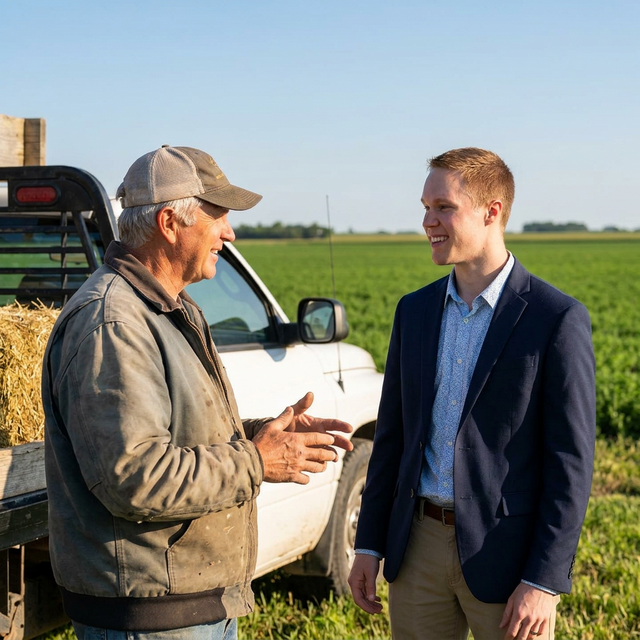
Whether you're running a 500-acre row crop operation or managing a multi-generational cattle ranch, your business structure needs to reflect how your operation actually works — not how a generic template assumes it does. We sit down, learn the operation, and build accordingly.
Why "Generic" LLCs Fail Farm Families
Filing articles of organization with the state takes 10 minutes. Writing an Operating Agreement that actually governs a farm takes expertise. Here is what generic templates leave out:
Buy-Sell Provisions
If your brother wants out of the farming LLC, how much do you owe him? A generic LLC doesn't say. A Midwest Ag Law operating agreement includes specific valuation formulas and multi-year payment terms so a buyout doesn't bankrupt the remaining partners.
Death and Disability
If a partner dies, does their spouse suddenly become your new business partner? Without specific transfer restrictions in your operating agreement, the answer might be yes. We ensure farm ownership stays with the people running the farm.
Voting Rights & Deadlocks
If two brothers own the farm 50/50 and disagree on trading the combine, what happens? We build in specific deadlock resolution mechanisms (like third-party appraisers or "Texas Shootout" clauses) to keep the operation moving forward.
Sweat Equity vs. Capital
How do you value the son who comes back to the farm and works for 10 years at a below-market salary? We structure compensation and equity thresholds that reward the sweat equity of the farming generation.
Ag Aviation Law
Very few attorneys understand the difference between Part 91 and Part 137 operations. Even fewer understand the immense liability and regulatory scrutiny that aerial applicators face every day.
Kole Pederson is an ATP-rated pilot and active aerial applicator. He flies the planes. He understands the FAA regulations, the EPA drift constraints, the insurance requirements, and the operational realities of crop dusting because he lives them.
- done Part 137 Compliance & Entity Structuring
- done Chemical Drift Liability Defense
- done Aircraft Purchase & Lease Agreements
- done Pilot Contract Review
Aviation Liability Demands Separation
If you run a farming operation and an ag aviation business, they cannot be in the same legal bucket. The liability exposure of aerial application is simply too high to risk the family farm dirt. We structure completely isolated corporate entities to ensure that an incident in the air doesn't cost you the ground.
Beware of Corporate Farming Laws
Nebraska and Minnesota have some of the strictest corporate farming laws in the United States. In Nebraska specifically, transferring agricultural land into an LLC or Corporation without understanding the family farm exemptions can trigger immediate legal violations and forced divestment of the land.
You cannot use a "LegalZoom" template for a Nebraska farm LLC. We ensure every entity we build complies strictly with state-specific agricultural reporting and ownership requirements.
Services We Provide
Farm LLCs & Partnerships
Operating agreements that reflect how your operation actually runs — who owns what, who manages what, how profits and losses are shared, how someone exits, and what happens when a partner dies.
Corporations & Co-ops
Some operations are better served by a corporate structure — especially with multiple generations involved or when the operation intersects with non-farming businesses.
Corporate Farm Law Compliance
Nebraska has some of the strictest corporate farm laws in the country. We make sure your entity structure stays on the right side of state-specific agricultural land ownership regulations.
Ag Aviation Law
Kole is an ATP-rated pilot and aerial applicator. Contract review, Part 137 entity structure, chemical drift liability defense, and aircraft purchase agreements for crop dusting operations.
Let's Get Your Operation Structured Right
Schedule a free consultation. We'll look at how your operation runs—from the tractor cab to the balance sheet—and recommend the legal structure that actually fits.